

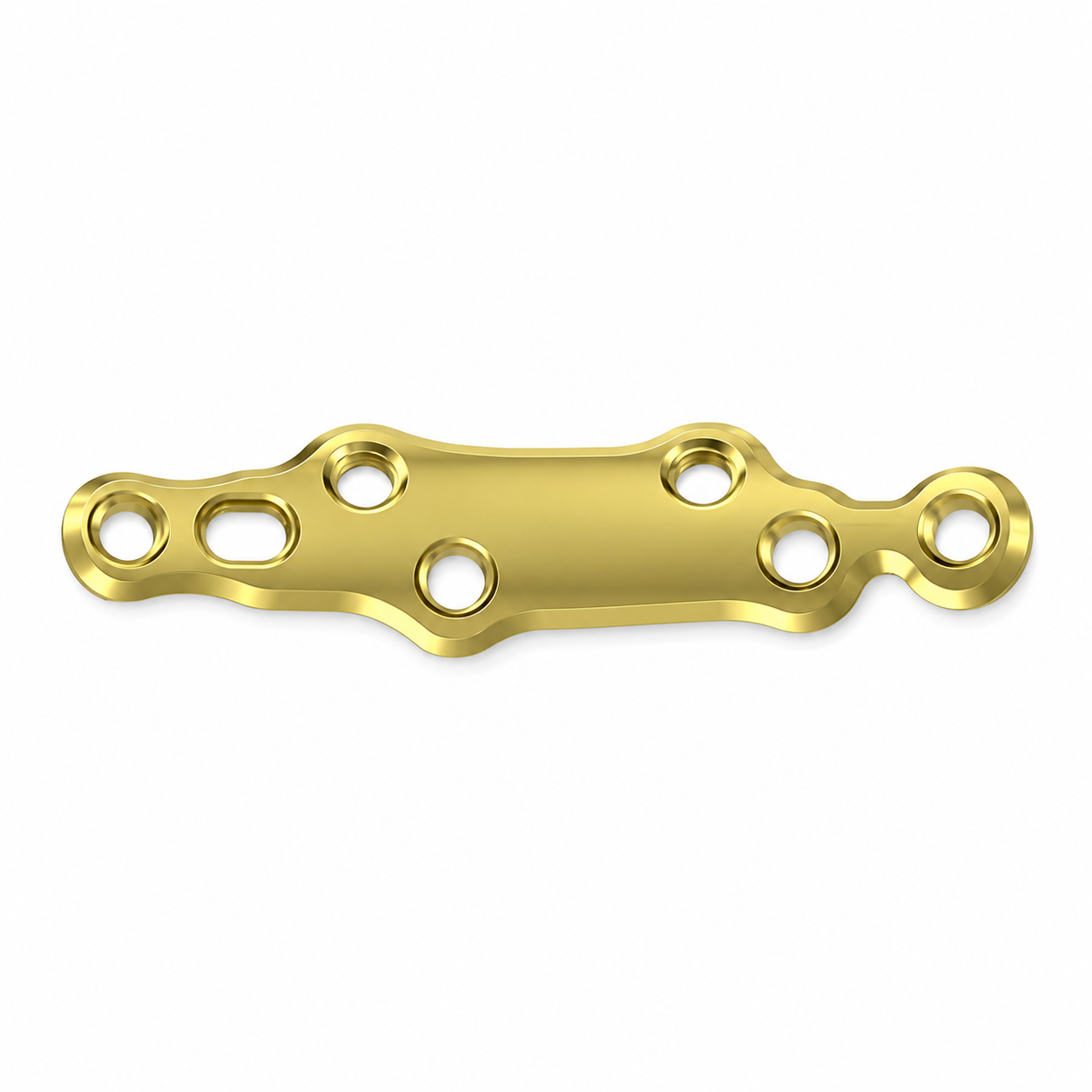
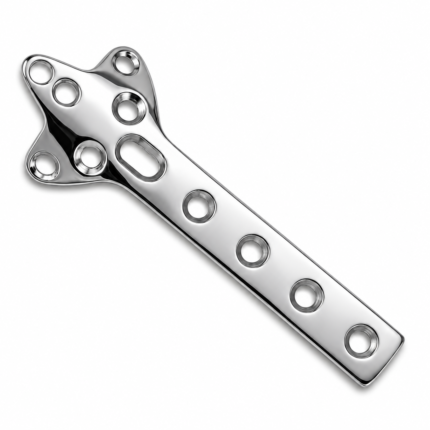
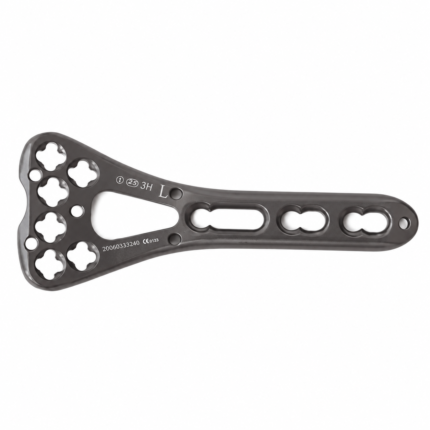
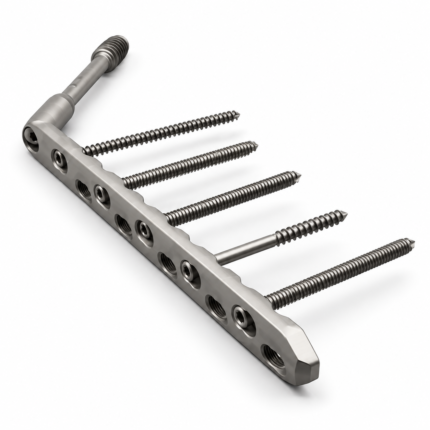
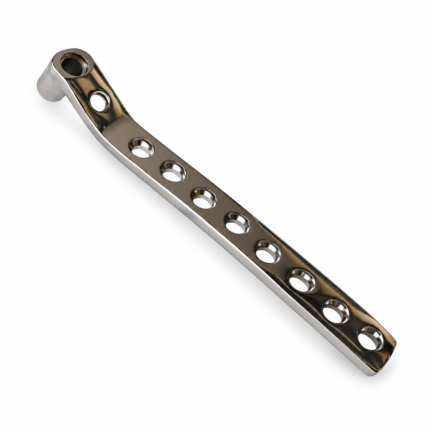
The Gold Anatomical Orthopedic Bone Fixation Plate – 7-Hole Contoured Fracture Plate is a specialized surgical implant designed for orthopedic internal fixation procedures. Featuring an anatomically inspired contoured shape and multiple fixation openings, this bone plate offers a structural platform for securing bone fragments and maintaining alignment during fracture management.
Bone fixation plates play an important role in modern orthopedic surgery by providing mechanical support following fracture reduction. When installed using an appropriate surgical technique and compatible screws, they can help maintain the position of bone fragments throughout the healing process.
This gold-colored orthopedic plate features a distinctive elongated body, widened fixation regions, and smooth external contours. Its visible configuration consists of six circular screw holes and one elongated slot, offering different potential fixation positions along the plate.
The compact construction and carefully shaped profile make this implant design suitable for evaluation in specialized orthopedic plating systems.
Key Features of the Gold Anatomical Bone Plate
1. Multi-Hole Fixation Configuration
The plate incorporates seven visible fixation openings, including six circular holes and one elongated slot. This configuration provides multiple potential screw placement positions along the implant.
2. Anatomically Contoured Design
Its curved external profile features widened areas surrounding selected fixation holes and narrower connecting sections. This geometry may facilitate positioning against specific bone surfaces when the plate is manufactured for an approved anatomical application.
3. Gold-Colored Metallic Finish
The implant features a gold metallic appearance that provides a distinctive professional finish. The exact base material and surface treatment, such as anodization, should be verified through the manufacturer’s specifications.
4. Elongated Fixation Slot
The elongated opening may support positional adjustment or a specific compression technique, depending on the compatible screw design and validated fixation system.
5. Smooth, Rounded Edges
The plate incorporates rounded external contours and smooth transitions along its perimeter. These design characteristics may assist handling and positioning during implantation.
6. Low-Profile Construction
The relatively flat structure is designed to provide a compact fixation profile. Its actual thickness and suitability for anatomical placement must be confirmed against the manufacturer’s dimensional specifications.
Orthopedic Applications
The Gold Anatomical Orthopedic Bone Fixation Plate is intended for use within appropriately validated internal fixation systems.
Depending on its approved anatomical indications, material properties, and mechanical design, plates of this general configuration may be used for:
-
Internal fixation of selected bone fractures.
-
Stabilization of bone fragments following fracture reduction.
-
Maintenance of bone alignment during healing.
-
Selected orthopedic reconstruction procedures.
-
Fixation following corrective osteotomy.
-
Specialized fracture management requiring plate-and-screw stabilization.
-
Bone fixation procedures where a contoured plate is indicated.
The precise anatomical location and approved clinical applications cannot be established from the image alone. The implant should only be selected according to its verified instructions for use.
Advanced Plate Design and Screw Positioning
The plate features an elongated central body connected to rounded terminal sections. The wider portions provide locations for circular screw openings, while the narrower regions create a distinctive contoured structure.
The combination of circular and elongated fixation openings may provide flexibility in planning screw placement.
In orthopedic plating, screw position, screw length, insertion angle, and fixation method influence the overall mechanical behavior of the construct. Accordingly, each screw must be selected based on compatibility with the specific implant system.
If the circular holes incorporate locking threads, the plate may support locking fixation. However, threaded locking compatibility cannot be confirmed from the image and should not be assumed without technical documentation.
Stable Bone Fixation and Alignment Support
One of the primary purposes of orthopedic plating is to provide mechanical stabilization after fracture reduction.
A correctly selected plate-and-screw construct can help maintain anatomical alignment and resist forces that might otherwise displace bone fragments.
The performance of the fixation system depends on several factors, including:
-
Bone quality and fracture configuration.
-
Plate dimensions and material composition.
-
Plate placement and surgical technique.
-
Screw compatibility and fixation pattern.
-
Mechanical loading during recovery.
-
Patient-specific anatomical characteristics.
Appropriate fixation planning is essential to achieving reliable clinical outcomes.
Material and Surface Characteristics
Orthopedic fixation plates are commonly manufactured using medical-grade titanium alloys or stainless steel, depending on the intended application and manufacturer.
Titanium alloys are frequently selected for certain orthopedic implants because of their established use in implantable medical devices, favorable strength-to-weight characteristics, and biocompatibility when appropriately processed and validated.
The gold appearance of this particular plate does not independently establish titanium composition or the presence of a specific surface coating.
Before listing the material as titanium, the manufacturer should confirm the alloy grade, surface treatment, and applicable product certifications.
Technical Specifications
| Specification | Details |
|---|---|
| Product Name | Gold Anatomical Orthopedic Bone Fixation Plate |
| Product Category | Orthopedic Implants |
| Product Type | Contoured Bone Fixation Plate |
| Total Fixation Openings | 7 |
| Circular Holes | 6 |
| Elongated Slots | 1 |
| Color | Gold |
| Material | Manufacturer confirmation required |
| Plate Design | Anatomically contoured |
| Surface Finish | Smooth metallic finish |
| Fixation Type | Plate-and-screw fixation |
| Screw Compatibility | According to manufacturer |
| Clinical Application | Orthopedic internal fixation |
| Available Sizes | To be confirmed |
| Sterilization | According to manufacturer instructions |
| Intended Users | Qualified orthopedic surgeons |
Benefits of the Gold Anatomical Orthopedic Plate
Multiple Screw Placement Options
The circular openings and elongated slot provide several potential fixation positions, offering flexibility when planning a compatible plate-and-screw construct.
Contoured External Structure
The shaped profile may help accommodate particular anatomical surfaces when the implant has been designed and approved for those locations.
Mechanical Support
When used appropriately, the plate helps stabilize bone fragments and maintain fracture reduction during healing.
Smooth Surface Design
The refined exterior and rounded transitions contribute to a compact surgical implant profile.
Distinctive Metallic Appearance
The gold-colored finish offers a recognizable appearance for orthopedic implant catalogs and specialized fixation product ranges.
Application-Specific Fixation
The design can be incorporated into fracture fixation systems where its dimensions, mechanical properties, and compatible screws meet the required clinical specifications.
Manufacturing Quality and Precision Engineering
Orthopedic bone plates require controlled manufacturing procedures to achieve consistent dimensions, mechanical properties, and surface quality.
Important manufacturing and quality considerations include dimensional inspection, accurate hole machining, material verification, surface finishing, mechanical performance testing, and traceability.
The manufacturer should also provide appropriate documentation covering corrosion resistance, biocompatibility, implant cleanliness, screw compatibility, sterilization requirements, and regulatory compliance.
Relevant testing and manufacturing standards must be selected according to the implant’s intended use and applicable medical device regulations.


Reviews
There are no reviews yet.