

The Stainless Steel Fully Threaded Locking Bone Screw is a specialized orthopedic fixation implant designed to provide mechanical stability and secure anchorage during bone fracture management and reconstructive surgical procedures.
Orthopedic screws play an essential role in internal fixation systems, helping surgeons stabilize fractured bone fragments, secure fixation plates, and maintain anatomical alignment throughout the healing process.
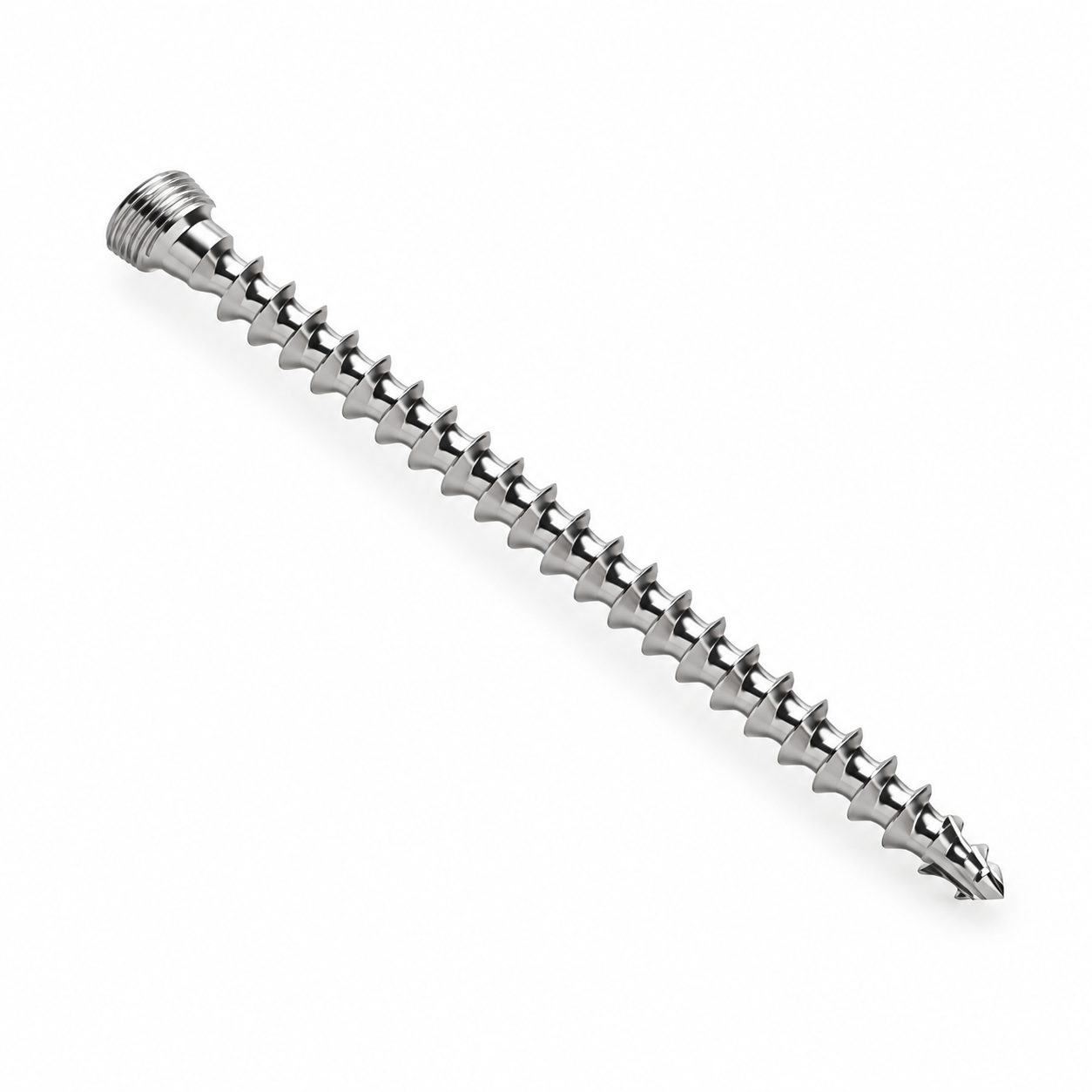
This fully threaded bone screw features an elongated shaft with prominent helical threads extending toward its pointed distal tip. Its proximal head incorporates a distinctive threaded profile resembling designs used in certain locking screw systems.
The screw’s metallic construction and precisely shaped thread pattern make it suitable for consideration in orthopedic fixation applications requiring compatible bone screw technology.
Key Features of the Fully Threaded Orthopedic Bone Screw
1. Fully Threaded Shaft Design
The screw features a prominent helical thread pattern extending along most of its shaft. This configuration provides a substantial threaded surface for mechanical engagement with bone.
2. Specialized Threaded Screw Head
The proximal end incorporates a threaded head profile. In compatible locking screw systems, a threaded screw head engages the corresponding plate hole to establish a fixed-angle connection.
3. Pointed Distal Tip
The screw features a tapered, pointed tip with visible cutting-style geometry. This design may facilitate insertion into prepared bone, depending on the manufacturer’s validated surgical technique.
4. Deep Helical Thread Profile
The external threads feature a pronounced profile designed to provide mechanical engagement with the surrounding bone structure.
5. Smooth Metallic Finish
The silver-colored metallic surface provides a clean surgical implant appearance, with defined thread edges and smooth transitions between structural sections.
6. Elongated Fixation Structure
The long shaft provides a fixation geometry that may be suitable for selected orthopedic applications requiring extended screw engagement, subject to verified dimensions and clinical indications.
7. Precision-Formed Thread Geometry
The consistent external thread pattern is intended to support controlled insertion and fixation performance when the implant is manufactured to validated specifications.
Orthopedic Applications
Fully threaded bone screws are used in various orthopedic fixation procedures, depending on their dimensions, thread design, material, and compatibility.
Potential applications of appropriately validated designs include:
-
Internal fixation of selected bone fractures.
-
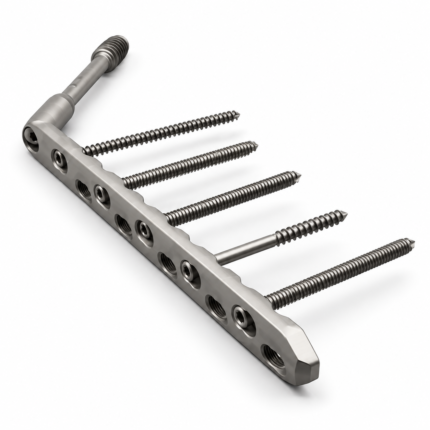
Securing compatible orthopedic locking plates.
-
Stabilizing fracture fragments.
-
Fixation during selected reconstructive orthopedic procedures.
-
Supporting appropriate plate-and-screw constructs.
-
Selected corrective osteotomy procedures.
-
Trauma fixation requiring threaded bone engagement.
The exact anatomical application must be established through the manufacturer’s approved indications and surgical instructions.
Locking Screw Technology
Locking bone screws differ from conventional orthopedic screws in how they interact with compatible fixation plates.
In a validated locking plate system, the threaded screw head engages a corresponding threaded hole in the plate. This connection forms a fixed-angle construct between the screw and plate.
Unlike conventional plate screws, which may rely on compressing the plate against the bone, locking screws can provide stability through the mechanical interface between the screw head and plate.
This fixation principle may offer advantages in selected fracture patterns or compromised bone conditions.
However, the screw’s appearance alone cannot conclusively establish its locking functionality. The head geometry and compatible plate system must be confirmed by the manufacturer.
Thread Design and Bone Engagement
The fully threaded shaft is one of the defining features of this orthopedic screw.
External screw threads are designed to engage the surrounding bone and transfer mechanical forces between the implant and skeletal structure.
Several factors influence the performance of orthopedic screw fixation, including thread pitch, thread depth, core diameter, screw length, bone density, and insertion technique.
A deeper thread profile may be appropriate for certain bone types or fixation systems, but suitability depends on the complete screw design rather than thread appearance alone.
The illustrated screw features a pronounced thread profile along its length, demonstrating a design intended for strong mechanical engagement when used appropriately.
Pointed Tip and Insertion Characteristics
The distal end of the screw features a tapered, pointed tip with visible cutting-style details.
Some orthopedic screws incorporate self-tapping or self-drilling features to assist insertion. Self-tapping screws are designed to form threads within a suitably prepared pilot hole, while self-drilling designs incorporate features intended to facilitate hole formation.
The pictured tip resembles a cutting-tip configuration, but its self-tapping or self-drilling classification requires confirmation from the manufacturer’s technical specifications.
The insertion technique, pilot-hole requirements, and any tapping procedures must follow the instructions provided for the specific implant system.
Material and Surface Characteristics
Orthopedic fixation screws are commonly manufactured using implant-grade stainless steel or titanium alloys.
These materials are selected for specific applications based on their mechanical properties, corrosion resistance, biocompatibility, and compatibility with other implant components.
The pictured screw has a polished silver metallic appearance.
Although this appearance is consistent with stainless steel orthopedic implants, the precise material composition cannot be established from the image.
The manufacturer should verify the alloy grade, surface condition, mechanical performance, and applicable standards before clinical use.
Product Technical Specifications
| Specification | Details |
|---|---|
| Product Name | Fully Threaded Orthopedic Locking Bone Screw |
| Category | Orthopedic Implants |
| Product Type | Bone Fixation Screw |
| Shaft Design | Fully Threaded |
| Head Design | Externally Threaded |
| Tip Design | Pointed, cutting-style |
| Thread Configuration | Helical |
| Color | Silver Metallic |
| Material | Manufacturer confirmation required |
| Surface Finish | Polished metallic appearance |
| Fixation Method | Threaded bone engagement |
| Locking Compatibility | Subject to manufacturer verification |
| Available Diameters | As per manufacturer |
| Available Lengths | As per manufacturer |
| Sterilization | According to manufacturer instructions |
| Intended Users | Qualified orthopedic surgeons |
Benefits of the Fully Threaded Bone Screw
Secure Bone Engagement
The helical shaft threads are intended to engage bone and contribute to the stability of an appropriately designed orthopedic fixation construct.
Potential Fixed-Angle Fixation
When manufactured as part of a compatible locking system, the threaded screw head may establish a fixed-angle connection with the fixation plate.
Multiple Orthopedic Applications
Fully threaded screws are available in designs suited to different orthopedic fixation requirements.
Extended Threaded Surface
The threaded shaft provides mechanical engagement over a substantial portion of the screw’s length.
Specialized Tip Configuration
The pointed distal end may support insertion according to the manufacturer’s validated surgical technique.
Precision Implant Design
The consistent thread profile and smooth metallic appearance provide a recognizable structure for professional orthopedic implant catalogs.
Manufacturing Precision and Quality Standards
Orthopedic bone screws require controlled manufacturing processes to maintain dimensional accuracy, thread consistency, and mechanical performance.
Important quality considerations include:
-
Verified implant-grade material composition.
-
Precision machining of the screw head.
-
Accurate thread pitch and profile.
-
Mechanical strength and fatigue evaluation.
-
Corrosion resistance testing.
-
Surface quality and cleanliness inspection.
-
Compatibility testing with fixation plates.
-
Biocompatibility assessment.
-
Manufacturing traceability.
-
Sterilization validation when supplied sterile.
Manufacturers should provide technical documentation demonstrating compliance with relevant medical device regulations and applicable product standards.
Compatibility with Orthopedic Fixation Plates
The performance of a locking bone screw depends heavily on its compatibility with the selected plate system.
Threaded screw heads must correctly engage the designated locking holes. Differences in thread geometry, screw diameter, or connection design can prevent proper fixation.
The screw should therefore be used only with compatible implants and instruments specified by the manufacturer.
Appropriate insertion technique and tightening requirements are important for preventing damage to the screw head, plate threads, or surrounding bone.
Why Choose the Fully Threaded Orthopedic Bone Screw?
The Fully Threaded Orthopedic Bone Screw combines an extended helical thread profile, a specialized proximal head, and a pointed distal tip.
Its design provides features commonly associated with bone fixation screws used in orthopedic trauma and reconstructive procedures.
For orthopedic implant distributors, surgical instrument manufacturers, and medical equipment suppliers, this screw design represents a potential addition to a professional bone fixation product range when its materials, mechanical characteristics, compatibility, and clinical indications have been verified.


Reviews
There are no reviews yet.