

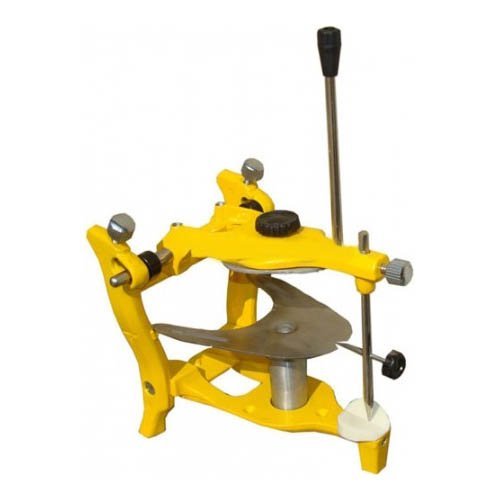


A dental articulator acts as a mechanical surrogate for the Temporomandibular Joints (TMJ) and the jaw bones. By mounting stone models of a patient’s teeth into this device, a dental technician can simulate the patient’s jaw movements (opening, closing, and lateral shifts) outside of the patient’s mouth.
Key Technical Features
-
Anatomical Accuracy: Designed to replicate the average relationship between the upper (maxillary) and lower (mandibular) arches.
-
Incisal Pin & Guide: Features a vertical adjustable rod (incisal pin) that maintains the “vertical dimension” or the height of the bite during the laboratory process.
-
Sturdy Construction: Usually made of a lightweight, durable aluminum alloy with a powder-coated finish (the yellow color is common for high-visibility and corrosion resistance).
-
Spring-Loaded Movement: Many models of this style include springs to allow for smooth lateral and protrusive excursions, mimicking natural chewing motions.
-
Mounting Plates: Equipped with knobs to securely hold dental casts in place while allowing for easy removal when necessary.
Primary Applications
-
Prosthodontics: Creating complete or partial dentures with correct occlusion (bite).
-
Restorative Dentistry: Crafting crowns, bridges, inlays, and onlays that won’t interfere with the patient’s natural bite.
-
Orthodontics: Planning tooth movement and analyzing bite discrepancies.
-
Educational Use: A standard tool for dental students to learn the mechanics of human occlusion.
Benefits for the Lab
-
Reduces Chairside Time: By perfecting the bite in the lab, the dentist spends less time adjusting the final prosthetic in the patient’s mouth.
-
Precision: Provides a stable platform for complex wax-ups and ceramic layering.
-
Durability: Built to withstand the moisture and stone dust common in dental laboratory environments.




Reviews
There are no reviews yet.